
 PH
PH
 IND
IND
 ID
ID
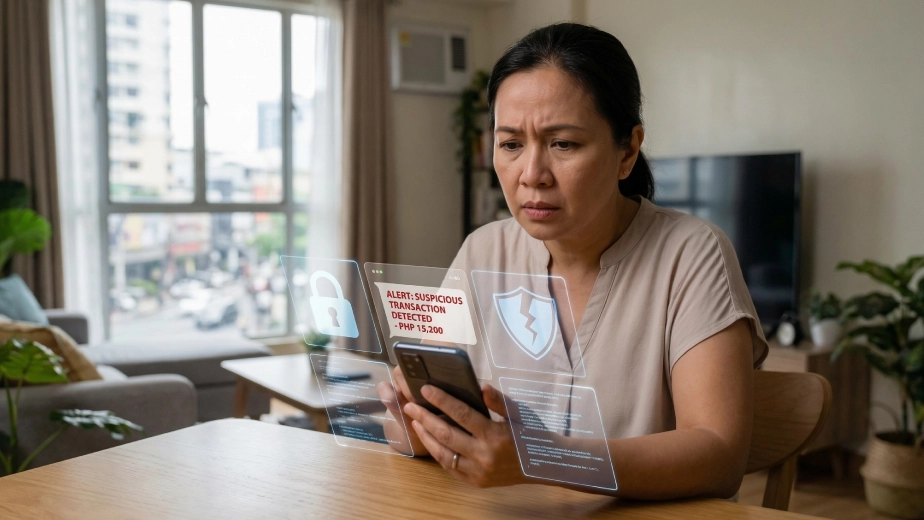
Earlier, trust used to be built in bank branches; you could walk in, see the people, and shake hands with them. There was eye contact, conversation, and reassurance. Today, trust is built, or broken, in milliseconds on a screen. And that’s exactly why trust in banking is at an all-time low.
The Philippines is experiencing rapid growth in digital financial services. Mobile wallets, online lending, neobanks, and digital onboarding have become part of daily life. But as access expands, so do risks. Fraud is evolving. Technology is accelerating. And customers are asking tougher questions. At its core, this isn’t just a technology issue. It’s a trust issue.
The Integrity Gap in Modern Finance
Trust in finance is not just about performance; it’s about character. Institutions are expected to demonstrate transparency, accountability, and ethical leadership.
That expectation has only intensified in the digital age. Customers today don’t just evaluate interest rates or product features. They evaluate whether the institution is ethical, whether their funds are protected, if their financial risk management is strong, and if they can make the financial assessment decisions comfortably.
Trust in banking now rests on both technical capability and moral integrity, with near-zero margin for error.
The Philippine Reality: Trust Under Pressure
In the Philippines, digital adoption is surging, but so is fraud. In early 2023, over ₱155 million was lost to scams, and by 2024, ₱409 million was lost due to account takeover fraud. According to TransUnion, 13.4% of digital transactions in the Philippines were flagged as suspected fraud, placing the country among the highest globally.
When fraud statistics dominate headlines, public confidence often weakens. Even if a customer has never personally been scammed, the perception of risk influences their behavior.
This has a direct impact on trust in the banking space. People begin hesitating before sharing documents. They second-guess onboarding flows and also worry about data misuse. This is where trust becomes fragile.
Why Financial Risk Management Feels More Complex Today
Traditional financial risk management focused heavily on credit risk and liquidity. Today, that’s just the beginning. Financial institutions today must manage fraud risk, AML compliance risk, cybersecurity risk, reputational risk, operational and AI-related risk, all at once.
Each digital transaction triggers a layered financial assessment behind the scenes, such as identity verification, credit evaluation, transaction monitoring, and regulatory screening. However, customers don’t see the process; they only see the outcome. If a loan is rejected without explanation, there’s a drop in trust. If onboarding stalls without clarity, confidence erodes.
Modern risk management strategies must now account for something intangible i.e. customer perception.
What’s Broken in the System?
Several structural gaps make trust harder to maintain:
Disconnected Data Ecosystems: Banks, fintechs, and telcos operate in silos. Fraud signals don’t always flow seamlessly.
Black-Box AI: Advanced models make decisions, but explanations are unclear. Even internal teams struggle to articulate the “why.”
Infrastructure Divide: Smaller financial players cannot always afford enterprise-grade fraud prevention, thereby increasing the ecosystem vulnerability.
Rapid Fraud Innovation: Fraudsters now use synthetic identities, AI-generated documents, and deepfakes, thus forcing institutions to constantly upgrade their risk management strategies.
All of this complicates financial assessment processes and makes transparency even more critical.
How IDfy Is Rebuilding Trust in the Philippines
Trust is not a feature; it’s an outcome. In the Philippines, where fraud risks are rising and customer expectations are evolving rapidly, trust must be embedded across every customer touchpoint, not added as an afterthought.
We focus on enabling banks, lenders, fintechs, and enterprises to grow confidently by combining seamless experiences with strong risk controls. Here is how we are doing that in the Philippines:
Omnichannel Onboarding
We deliver a unified onboarding experience across digital, video, branch, and assisted journeys. Customers move seamlessly between channels while institutions maintain consistent risk controls and higher conversions.
Merchant Onboarding
Instant, real-time verification of businesses, owners, and locations enables faster merchant activation. Institutions scale payment acceptance while keeping fraud and compliance risks in check.
Branch Banking Transformation
We turn branches into high-performance digital onboarding hubs with assisted journeys and integrated risk checks. Faster service, smarter cross-sell, stronger customer confidence.
Intelligent Lending
From the approval application, we streamline lending with real-time identity and risk signals. Faster decisions, lower drop-offs, and more defensible financial assessments.
Data Compass
We provide complete visibility into sensitive data across systems and endpoints. Continuous monitoring helps prevent policy breaches before they turn into incidents.
Unified Face Database
One face. One identity. We detect duplicates, screen known fraudsters, and enable secure authentication across channels, strengthening fraud defense without adding friction.
Conclusion
In today’s financial ecosystem, capital strength matters, technology matters. regulatory compliance matters. However, none of it sustains without trust. Trust in banking today means strong fraud controls, ethical governance, transparent financial assessments, clear communication, and robust AML frameworks. Trust requires institutions to align with both innovation and integrity.
Financial institutions that succeed in the Philippines over the next decade will not just be those with advanced systems, but those that embed integrity into their financial risk management, make financial assessment transparent, and build thoughtful risk management strategies that protect both the system and the customer. Trust is no longer assumed. It is earned; every single transaction matters.
If your institution is rethinking onboarding, strengthening AML frameworks, or upgrading its fraud and financial risk management systems while preserving customer confidence, we’d love to partner with you.
Reach out to us at emily@idfy.com to explore how we can help you build trust into every financial interaction. Because in finance, especially now, trust is everything.